Durham College joins national movement to support pollinators

Durham College (DC) is buzzing with good news. The college has officially been recognized as a Bee Campus by the Pollinator Partnership, joining a growing group of Canadian institutions that are taking meaningful action to support pollinators.

This designation reflects the work already underway across DC’s campuses to protect biodiversity, expand pollinator habitats, and involve the community in meaningful environmental learning. It also aligns with our commitment to sustainability, demonstrating how we integrate environmentally sustainable practices across our campuses while fostering healthier ecosystems for pollinators and people.

Supporting a healthy environment
Pollinators play a vital role in sustaining ecosystems and food systems, yet their populations face increasing pressures, including significant habitat loss. DC’s new Bee Campus status highlights our role in caring for local ecosystems and strengthens our ongoing commitment to sustainability across both campuses.

What DC is doing
DC has been enhancing pollinator habitats for several years. These efforts include:

  • Planting and maintaining native pollinator gardens at both the Whitby and Oshawa campuses
  • Reducing mowing in select areas to allow wildflowers and grasses to establish naturally
  • Avoiding chemical pesticides and using environmentally responsible alternatives
  • Planning for additional garden areas, nesting sites and educational signage
  • Sharing information through campus communications, events and workshops

Future plans include seed and plant exchanges, planting days, and educational activities designed to engage students and employees.

“Becoming a Bee Campus is an important step in supporting the health of our local environment,” said Amanda Blenkhorn, Director, Ancillary Services. “Our teams have already been working to create spaces where pollinators can thrive, and this designation strengthens that commitment. We look forward to expanding these efforts and engaging more members of our community in the work ahead.”

Recognition from Pollinator Partnership
In confirming our Bee Campus status, the Pollinator Partnership team recognized DC’s strong focus on native plant habitat and long-term stewardship. They noted that our efforts to expand native species and reduce mowing directly support pollinator health by increasing food and shelter from spring through fall.

Looking ahead
As a Bee Campus, DC will take part in upcoming networking and knowledge-sharing meetings with other participating institutions. These sessions offer opportunities to learn from campuses across the country and to contribute to a new Bee Campus Handbook now in development.

Growing a culture of stewardship
The Bee Campus designation reflects the dedication of many DC employees, students and partners who continue to support this work. It also encourages the wider campus community to help protect pollinators and take part in upcoming activities throughout the year.

If you are interested in participating in the Green Impact Team or the DC Pollinator Team, please contact us.
Durham College is leading the way to a greener future

At Durham College (DC), we prioritize green initiatives in everything we do. From our solid waste management policy that supports recycling batteries, light bulbs and air filters, to our field-to-fork-to-field philosophy – DC truly walks the talk and has the results to prove it. Recently named one of Canada’s Greenest Employers for the seventh year in a row – our efforts are truly making a difference not only on our campuses but in educating the next generation of students to be leaders in sustainability, too. 

Here are just a few examples of how green we really are at DC.

  • Going underground for energy generation.

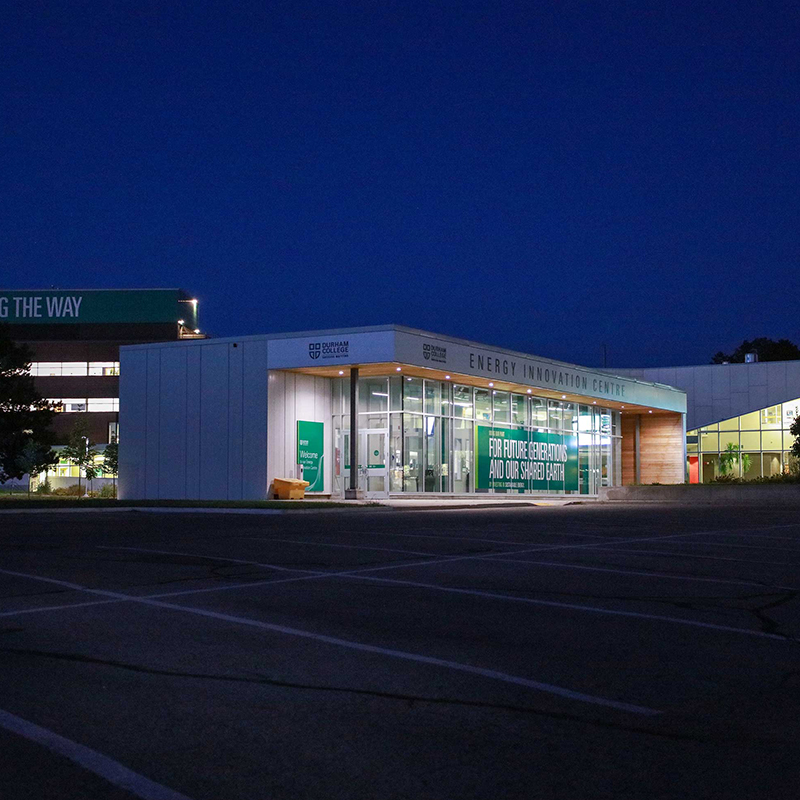
    DC’s Oshawa campus features the college’s geothermal field and Energy Innovation Centre (EIC), which helps reduce the college’s demand for heating and cooling. Located underground, the geothermal field captures 550 tons of clean, sustainable power, which is processed through the EIC and distributed to DC’s Gordon Willey building to fuel its energy needs.

    The EIC is a bright and modern exhibit-like building where you can learn more about how the geothermal system works through interactive touch screens, system diagrams and performance metrics. Visit our Oshawa campus today and experience the EIC for yourself!

  • Building a better planet with a field-to-fork-to-field philosophy

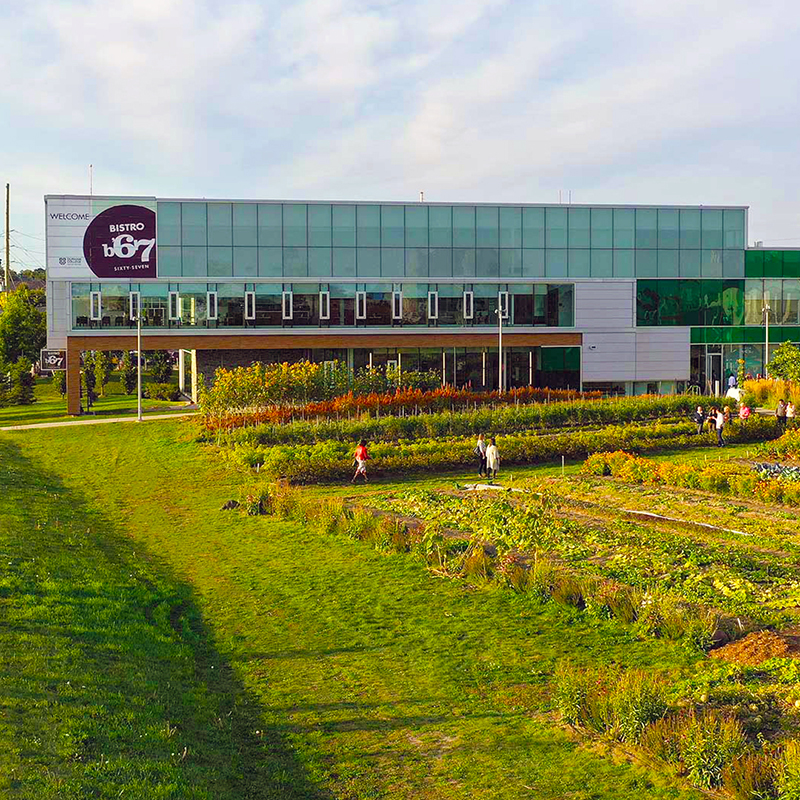
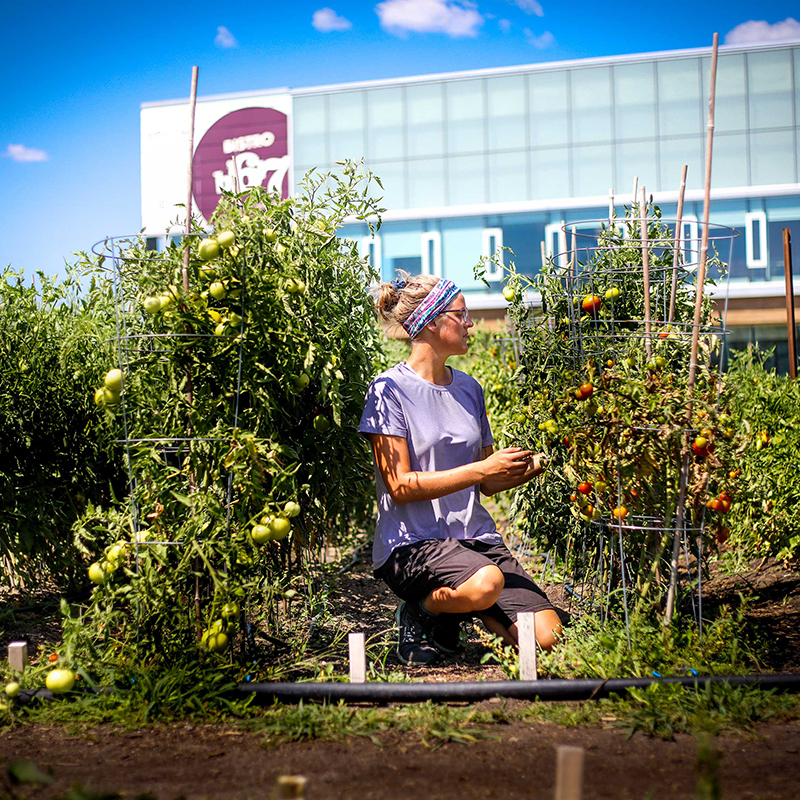
    DC’s Silver STARS rated Whitby campus is home to the impressive W. Galen Weston Centre for Food (Weston Centre). Students in the Faculty of Hospitality & Horticultural Science, plant, grow and harvest produce on the campus’ one-acre farm, which is prepared and served at the Weston Centre’s award-winning Bistro ’67 restaurant and Pantry retail store.

    As the college works toward a zero-waste policy in its culinary labs, the Weston Centre’s new organic regeneration system will support our efforts by producing waste compost for use in the college’s agricultural growing fields, completing the field-to-fork-to-field cycle.

    The Weston Centre also features state-of-the-art labs including two greenhouses, an indoor hydroponic farm, pollinator garden and an arboretum, just to name a few.

  • Helping combat food insecurity with sustainable urban farming.

    As a recognized leader in food, farming and horticulture science education, DC’s Barrett Centre of Innovation in Sustainable Urban Agriculture (Barrett Centre) addresses some of society’s biggest challenges, including food insecurity. By partnering with the community in local food production initiatives and creating a new dynamic urban farm which follows a holistic and sustainable approach to urban agriculture and vertical and regenerative farming methods, we will help solve food insecurity issues while also enhancing soil and air quality. 

    This year, 10 student-led projects focused on addressing food insecurity were funded by the RBC Urban Agriculture Work Integrated Learning Program. Students from across the college in any faculty were invited to apply to explore unique ways to address this challenge.

  • Going green inside the classroom and beyond.

    Although DC’s state-of-the-art green facilities are quite impressive, small changes are never overlooked. For example, water bottle fillers are available across both campuses to reduce the use of plastic, low-flow water systems in bathrooms save water, LED lights reduce energy and there are charging stations for electric vehicles.

    The development of the college’s new Office of Campus Sustainability also serves as proof of our long-term commitment to sustainability and dedication to continuous improvement and innovation.

At DC, we understand that our sustainability efforts exceed our classroom walls and campus grounds. They impact more than just our students and employees; they help contribute to a healthier planet for future generations.