DC alumnus turns a commitment to community into a fulfilling career

For Gary Paulin, returning to Durham College (DC) feels like coming full circle.

Twenty-five years after graduating from DC’s Police Foundations program, Paulin is again involved in the college community, this time as a member of the DC Indigenous Education Circle (the Circle), where he helps ensure Indigenous students feel welcomed, represented, and supported throughout their educational journey.

The Circle was formed to provide Indigenous Peoples with the opportunity to advise and make recommendations to the college focused on creating a welcoming and respectful environment that values Indigenous history, culture, world view, and ways of knowing.

“Gary has been an incredible contributor to Durham College’s Indigenous Education Circle, bringing thoughtful leadership, a strong commitment to community, and a genuine desire to support student success,” said Dr. Kayla Murphy, Director, Indigenous Initiatives at DC and Co-chair of the Indigenous Education Circle. “Partners like Gary help ensure our work remains grounded in Indigenous perspectives while creating meaningful opportunities for students to see themselves reflected in leadership.”

Throughout his life, Paulin has always been drawn to roles that put a focus on community building. Growing up, he was inspired by officers in his hometown of Sudbury, Ontario to explore a career in policing.

“The officers that came by were always friendly and engaging,” said Paulin. “I wanted to be a role model in my community. I felt a strong urge to help, to participate, and to make a safe place.”

After high school, he enrolled in the Canadian Armed Forces, serving in the Reserves while also working for his brother’s sheet metal fabricating company. He decided to pursue his interest in policing by enrolling in the Police Foundations program at DC and graduated with honours in 2001. Employed as an auxiliary constable after college, he was able to combine his education, career experience, and military background to secure a position as a Nuclear Security Officer at Ontario Power Generation (OPG), taking on progressively senior roles over the past 24 years.

Paulin is now the Recruitment & Onboarding Lead for OPG’s Recruitment, Onboarding and Equity department and leads the Indigenous Opportunities Network (ION), a community-centered program that recruits job-ready Indigenous people for various energy sector occupations across Ontario including skilled trades, project management, and administrative roles. ION works towards creating an engaged and inclusive workforce that reflects the broad diversity of Indigenous communities and people across OPG and the greater energy sector.

“It’s been a very rewarding career for me,” explained Paulin. “ION is creating endless possibilities. We’ve placed over 275 Indigenous people within the industry. That’s 275 people and their families’ lives changed.”

A father to eight, he is excited to watch his children pursue their own career interests, including his son Brandon who plans to follow in his father’s footsteps as he begins the Police Foundations program at DC in January 2027.
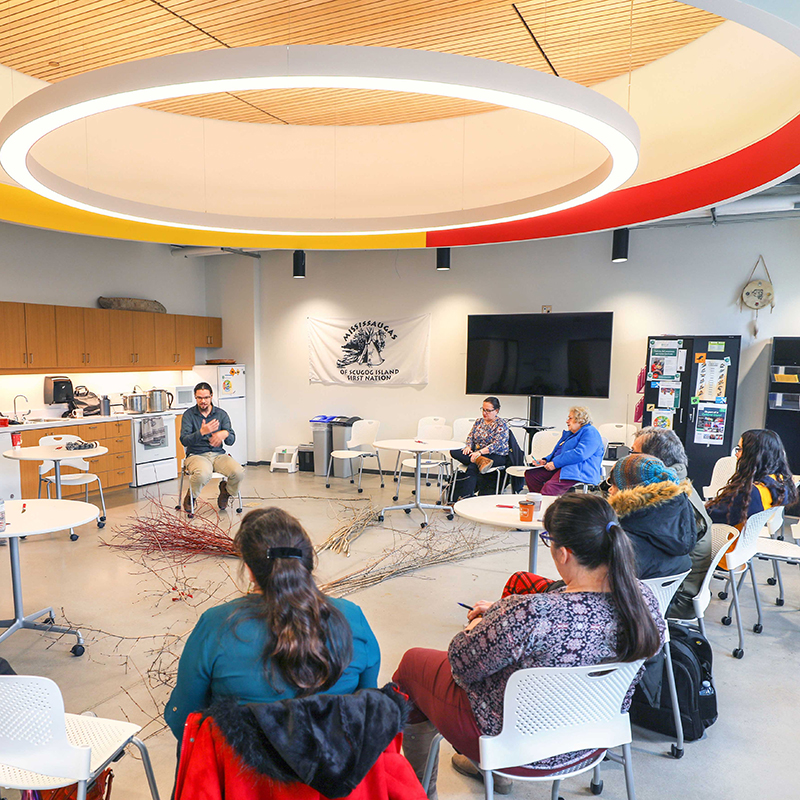
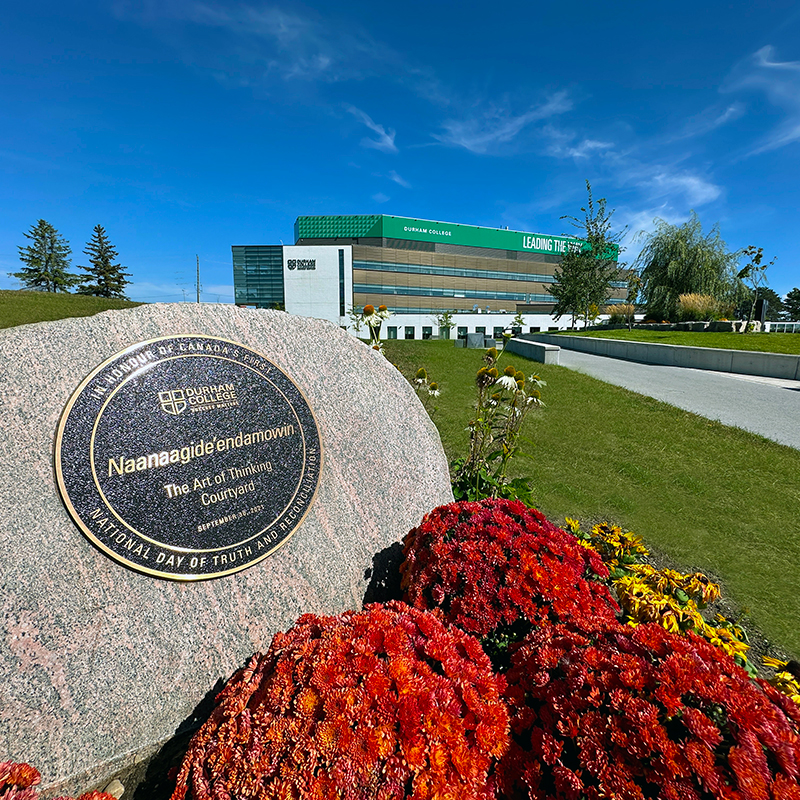
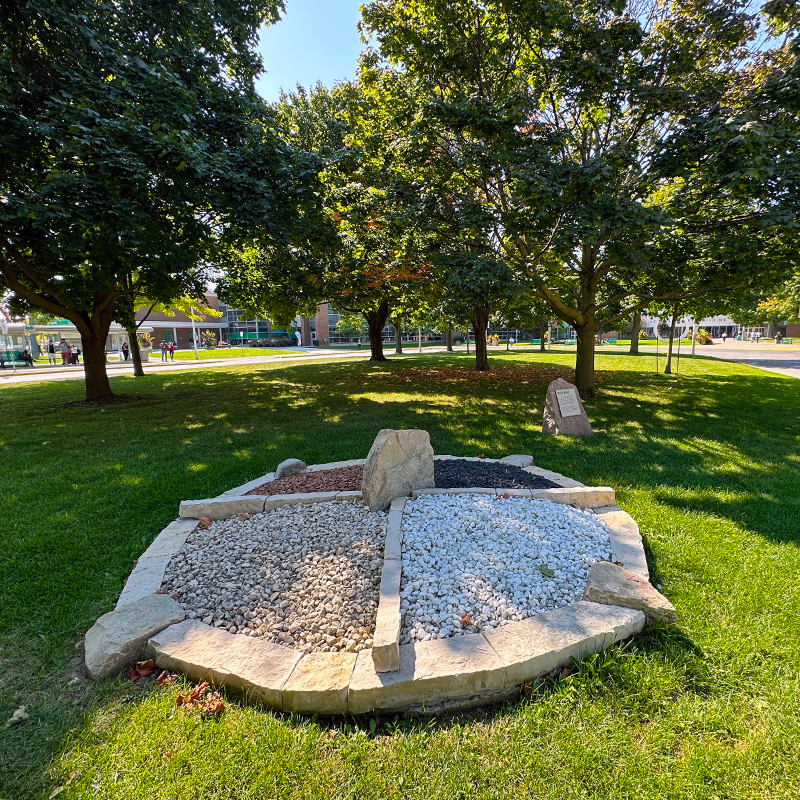
Explore Indigenous spaces on the Durham College campus

Durham College (DC) is committed to providing a warm and welcoming environment for Indigenous students and employees and providing space for meaningful conversations and reflection to take meaningful steps towards reconciliation.

Providing these spaces for Indigenous students – and making them visible for all to see – is paramount, according to Sherry Miller, Indigenous Student Success Coordinator.

“Growing up in Toronto, there was no representation or signs of Indigenous life anywhere,” she said. With landmarks like the Medicine Wheel and the Weeping Willow tree, as well as the beautiful Indigenous art displayed throughout the First Peoples Indigenous Centre (FPIC), she’s proud that’s not the case at DC.

“For Native people, being in a space and seeing those symbols is huge. It’s proof that you belong here, that you live here.”

Here are three places at our Oshawa campus where you can pause for reflection and learning.

  • Suswaaning Endaajig – First Peoples Indigenous Centre

    The doors of the First Peoples Indigenous Centre (FPIC) are open to all at DC, and the space can accommodate a number of uses. It’s located in the Centre for Collaborative Education (CFCE), Room 141, and students are free to stop in for a respite from campus life, grab some coffee or a snack, and enjoy a quiet spot to study. They can also utilize the Elder’s Room to reflect or perform a smudging, a sacred ceremony in which traditional medicines like sage, cedar and sweetgrass are burned to purify body, mind, heart and Spirit.

    A number of resources are available to help Indigenous students learn more about their culture and communities. The FPIC team - Dr. Kayla Murphy, Director of Indigenous Initiatives; Kiana Cress, Indigenous Communities Outreach Coordinator; and Sherry Miller, Indigenous Student Success Coordinator – is always happy to connect with students, share their wisdom and provide guidance, or just have a friendly chat.

  • Naanaagide’endamowin Courtyard

    The courtyard next to the CFCE is a great place to enjoy fresh air and sunshine, but it’s also an Indigenous learning space gifted an Anishinaabemowin name, Naanaagide’endamowin (The Art of Thinking), by Elder, Dr. Shirley Williams. Observant visitors will find six QR codes to scan, which will take them directly to information about Land Acknowledgements, the Indigenous Histories Modules, 13 Moons, Sacred Medicines, upcoming events, and the Weeping Willow at the centre of the courtyard.

    The tree was planted in 2021 in memory of the Indigenous children who did not make it home from residential schools. A willow was chosen for its ability to bend without breaking, a trait also found in the resilient Indigenous communities of Canada.

  • Medicine Wheel

    The Oshawa bus loop is home to a Medicine Wheel rock garden. Installed in 2014, it is fittingly located on the bus loop island, where it can serve as a spot for quiet reflection in the middle of our bustling campus.

    Used as a teaching and learning tool in Indigenous cultures, the Medicine Wheel represents the interconnectedness that exists in ourselves and the world around us. The wheel’s four quadrants - spiritual, physical, mental and emotional – promote balance in one’s life and living in harmony with all creation.

Durham College is dedicated to advancing truth and reconciliation by weaving Indigenous knowledge and perspectives into the fabric of our campus. Explore this content collection to learn about the resources, supports and opportunities that are available on campus.


Prioritizing Indigenization inside and outside the classroom

For Durham College’s (DC) Faculty of Media, Art & Design (MAD), actively embedding Indigenous perspectives and knowledge directly into program curriculum is critical to fostering a learning environment that honours and reflects the voices of Indigenous communities.

“Our goal is to provide students with opportunities to engage with Indigenous perspectives in a meaningful way,” says Barry Waite, Executive Dean, Faculty of MAD, DC. “Whether through podcasting, international collaborations, or coursework, we want to ensure students gain a deep understanding of Indigenous viewpoints and experiences, and how to share these stories responsibly.”

One way is through Enactus DC, where students recently produced a podcast series, Founder’s Drive, aimed at highlighting the stories of young Indigenous entrepreneurs. This project, celebrated at the Enactus Canada Regional Exposition, not only amplifies Indigenous voices but also inspires students by showcasing the potential of social entrepreneurship in Indigenous communities.

Navraj Sandhar, a recent graduate from DC’s Journalism and Creative Writing program, was the project lead for season two of Founder’s Drive, and said it was an eye-opening journey in many ways. “The Indigenous focus of this season intrigued me from the very beginning. I had the privilege of learning directly from community leaders during our trips to Akwesasne territory and the Native Canadian Centre of Toronto,” he said. “Each conversation taught me more about Indigenous ways of thinking and learning, like how entrepreneurship can be used as a tool for preserving traditions, supporting the community, and creating something that lasts for future generations.”

Looking forward to its next Faculty Lead Classroom Abroad (FLCA) trip this fall, Waite reflected on DC’s FLCA trip to Guatemala last October, where students worked alongside Mayan youth to create and share stories about Indigenous rights in Canada and Guatemala. “The trip not only broadened students’ worldviews but also allowed them to witness firsthand the importance of storytelling in Indigenous cultures,” he adds.

Additionally, first-year students in DC’s Broadcasting – Radio and Contemporary Media program take the course Indigenous Perspectives in Contemporary Media, which addresses the Truth and Reconciliation Commission Calls to Action, particularly around the role of media. This is further complemented by the Journalism – Mass Media program, where students explore impactful storytelling with Indigenous communities through elective courses.

“Indigenous content isn’t just an addition to our programs,” Waite says. “It’s an essential part of preparing students to be culturally aware and socially responsible communicators.  It also reflects our commitment to meeting Recommendation 86 from the Truth and Reconciliation Commission that calls on media schools to provide robust education about the experience of Indigenous peoples in Canada.”

These initiatives within DC’s Faculty of MAD contribute to the college’s broader mission to equip students with the tools to engage with reconciliation efforts meaningfully, and as storytellers, ensuring that Indigenous voices are not only heard but also respected and amplified.


Durham College is dedicated to advancing truth and reconciliation by weaving Indigenous knowledge and perspectives into the fabric of our campus. Explore this content collection to learn about the resources, supports and opportunities that are available on campus.

Photo Credit: Founders Drive