Durham College and Seven Generations Education Institute partnership supports Indigenous learners in healthcare

Durham College’s (DC) partnership with Seven Generations Education Institute (SGEI), an Indigenous-led educational organization, is helping expand access to healthcare education for Indigenous and non-Indigenous learners in Northern Ontario. Through the collaboration, DC’s Paramedic program is delivered at SGEI, enabling students in the Treaty 3 area and beyond to complete a DC credential close to home. Importantly, the partnership allows students to study paramedicine, and then obtain employment, while remaining engaged in their local communities.

This spring, DC Paramedic Program Coordinator Dale Button attended SGEI’s convocation ceremony to celebrate the success of SGEI’s third graduating paramedic cohort.

“The SGEI graduation was a truly inspiring event,” said Button. “The ceremony was deeply rooted in Indigenous culture, with an elder offering words of congratulations and drums welcoming the graduates. It was especially moving to see learners of all ages completing courses that reconnected them with their language and heritage. It was a privilege to attend and witness the pride and spirit of the graduates, and particularly rewarding to see that each had already secured employment with local paramedic services.”

For graduates, the experience was equally meaningful.

“I’ve never been part of a graduation quite like this one,” said SGEI Paramedic graduate Makayla Vandenbroere. “The inclusion of Indigenous traditions created an atmosphere that was both inspiring and deeply moving.”

She added that the program’s smaller class size and close-knit environment strengthened the learning experience. “We built meaningful relationships with our instructors and with each other. We weren’t just classmates, we became a tight community that supported one another through every challenge.”

Vandenbroere also highlighted how the program prepared students for their careers. “The program didn’t just teach us the skills needed to become paramedics; it also guided us through the hiring process so we felt prepared, confident, and ready to step into our new roles.”

This partnership reflects DC’s commitment to community-connected education, Indigenous learning, and workforce development, ensuring students across Ontario have equitable access to high-quality training that supports both their future careers and their communities.
Training future frontline responders: DC paramedic program prioritizes mental health and well-being

Paramedics are the frontline responders in medical emergencies, bridging the critical gap between the scene of an incident and hospital care. Their expertise, quick thinking, and compassion save countless lives every day, making them indispensable in times of crisis.

At Durham College (DC), we train the next generation of first responders in the Paramedic diploma program. This dynamic program helps students build the diverse skill set needed to succeed, and includes clinical and field placements as well as experiential learning opportunities – such as our annual emergency simulation exercise – to maximize hands-on learning within the field. A key focus is also supporting the mental health and well-being of not only community members but the paramedics themselves, given the stressful, high-intensity work that they do.

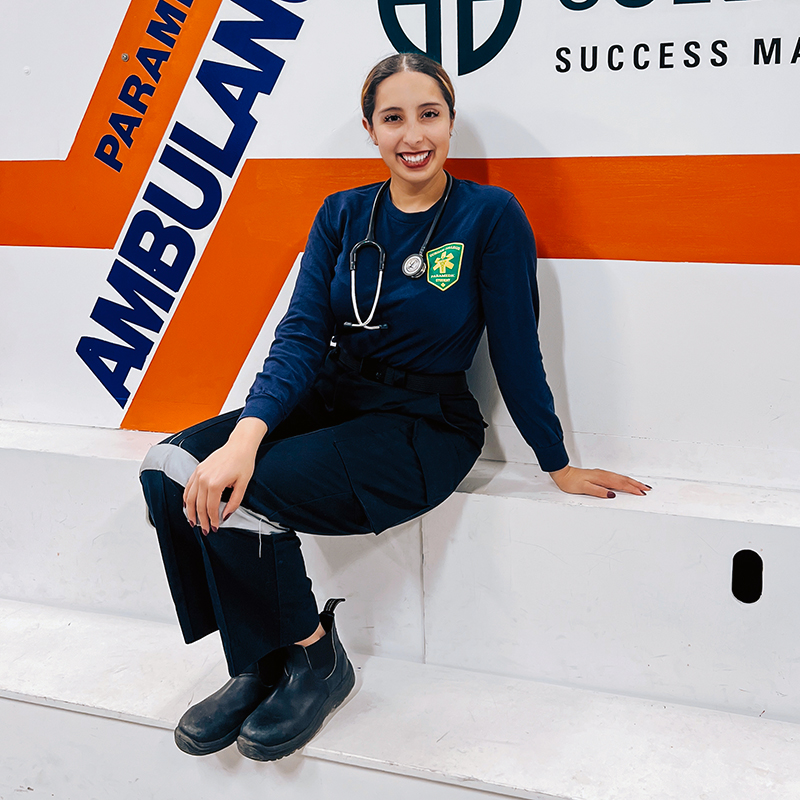
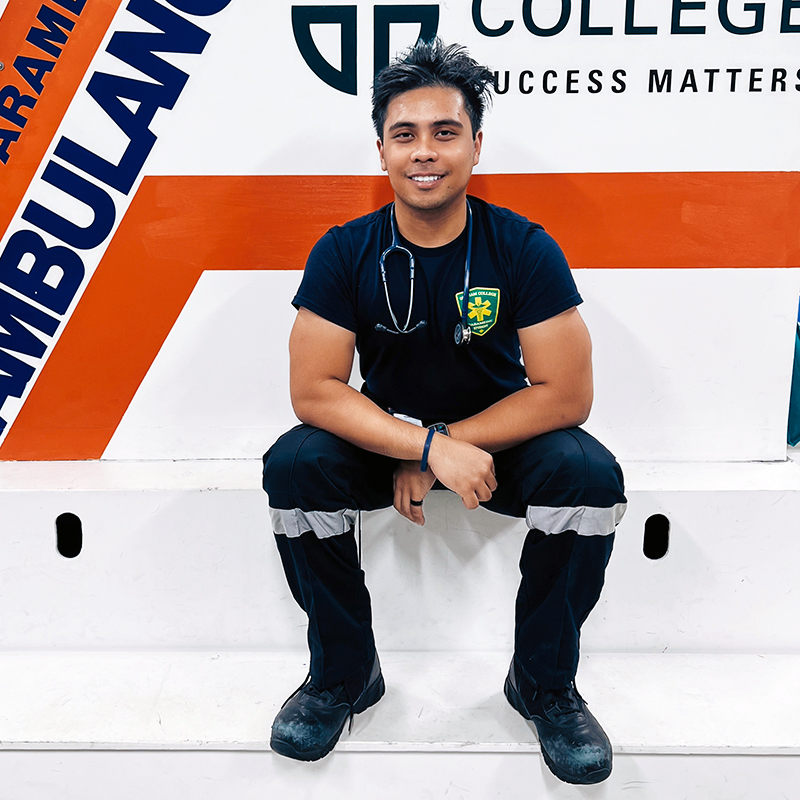
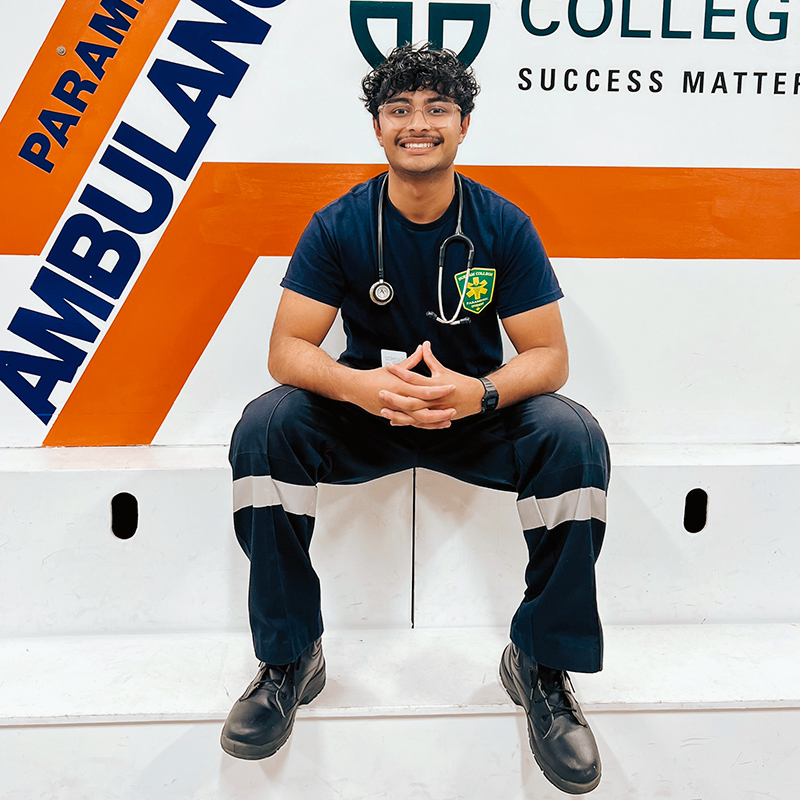
As we recognize Paramedic Services Week, we caught up with three of DC’s paramedic students – Sofia Mingram Romero, Remiel kit Manlapig, and Manav Patel – to learn more about their experience in the program.

  • Sofia Mingram Romero

    With her love for photography and passion for capturing life through her lens, Sofia realized she wanted to be able to support life in other ways, too. When she witnessed a medical emergency while working, she was able to help, but realized there were more advanced skills she might need in the future. That’s when she decided to return to DC, where she had previously graduated from the Advertising and Promotion program, to pursue a new career as a paramedic.

    What she values most in the program is how modernization and holistic care are redefining the profession.

    “There has been a significant change in the way paramedics help those experiencing mental health issues, so there is a need to consider the complexities in people’s lives and how to best help them,” she said.

    In addition to acknowledging the need to help people with their mental health needs, the program prioritizes the mental health and well-being of its students.

    “In this role, we experience a lot of stressful and challenging situations. Sharing our experiences and being vulnerable while working together is critical to ensure we are getting the help and support we need.”

  • Remiel kit Manlapig

    While studying Emergency Services Fundamentals at another institution, Remiel transitioned to the paramedic program at DC because he was looking for something more fast-paced, while remaining in the medical profession. He said the exceptional support from faculty and the round the clock accessibility of paramedic resources such as labs were among the key reasons he chose the program.

    Like Sofia, Remiel values the mental health supports available in the program. Peer support groups are offered for each cohort, and Remiel is a designated member who is responsible for looking out for peers when they face something overwhelming.

    After graduation, Remiel is considering becoming a community paramedic, a non-emergency service provider who supports public health and preventative services. There are opportunities for students to participate in this type of paramedic work through their field placements.

    “DC is leading the way with stationing its community paramedics in locations such as the Back Door Mission to extend help to the homeless as well as provide critical care to those in need at their homes,” he said.

  • Manav Patel

    As a soon-to-be graduate of the Paramedic program, Manav said the most valuable aspect of the program for him was the opportunity to connect and interact with professional first responders through placements.

    “I take inspiration from those professionals and can leverage the experiences into my own training and learning. They’re all willing to teach you,” he said.

    “One of the best things that we have through the program is that even the teachers are very aware of how our mental health does impact our education.”

    The importance of nurturing both physical health and emotional resilience is a key takeaway from the program.

    He enjoys how every day is different and brings opportunities to learn new things.

Equipped with knowledge, empathy, and unwavering determination, these aspiring paramedics are all set to make an incredible impact on the lives of those they serve, ushering in a future defined by compassion and excellence. Are you interested in a career as a paramedic? Learn more online.


DC leading the way in Paramedic education

The province of Ontario needs more paramedics, and Durham College (DC) is answering the call.

Last September, DC added 10 extra seats to the popular Paramedic diploma program in response to the increased demand for paramedics in Ontario and nationwide.

That demand remains high, and last month, Ontario Health Minister Sylvia Jones announced that the province’s community colleges would be adding 300 new spaces in their paramedic programs in order to bolster the workforce of this critically important sector. DC is doing its part by adding 30 seats in a compressed stream that will be delivered over four consecutive semesters.

DC’s highly regarded Paramedic program is always competitive and oversubscribed. The popularity of the program is due to many factors, including DC’s state-of-the-art facilities and equipment, 24/7 access to the lab, a team of passionate and dedicated instructors, and a willingness to innovate and change with the times.

After investing in additional lab space and simulation equipment, DC is ready to accommodate more students while maintaining the high quality of the program, according to Gillian Dunn, associate dean in the Faculty of Health Sciences.   

“The faculty and staff, they’re so dedicated and committed to the program,” she said. “We’re always in close contact with our external stakeholders and partners, making sure that they’re being informed about our curriculum and have the opportunity to provide input on how we prepare our graduates. We have really strong partnerships with many of the paramedic services, both in and outside of Durham Region.”

Those partnerships allow students to get experience in long-term care facilities, hospital clinical rotations and on-ambulance preceptorships, where they ride along with professional paramedics. The amount of experiential learning has been a pleasant surprise for Zachary Lash, a student in the program who will enter his second year in September.

“One thing that caught me off guard was how often our faculty are throwing opportunities at us to get out there on the streets and work with paramedic services around Ontario for training,” he said. “The fact that DC gives us that opportunity almost every month means that we’re just practicing and getting better and better and better.”

Sabrina Chapman and Jaime Philips are also entering their second year of the program in September, but they’re not taking the summer off. Instead, they’re furthering their education as summer students in the logistics department of the Region of Durham Paramedic Services. The experience they gained in the program’s first year is one of the reasons they were able to beat out other students for the coveted opportunity.

Learning from instructors who are working paramedics has been particularly influential for the pair.

“The fact that you have that exposure to them and their stories from what’s happening on the road, it really helps you gain a better perspective,” said Philips.

Another reason the pair chose DC is that the program is recognized by Accreditation Canada, which means they’ll be eligible to work as a paramedic anywhere in the country.

Their classmate Lash has also been impressed by the program; particularly its focus on the mental and emotional toll the job can take.

“Going into this line of work, it’s important to have a resilient and strong mental health background, and DC has provided us with the necessary tools and classes on how to stay on top of that stuff and maintain our wellness,” he said.

The program is hard to get into and harder to complete, but students who are willing to work hard will excel, according to part-time faculty member Joseph Barrett, who teaches the program’s Crisis Management course.

“What you put in is what you get out. It’s a very intense, demanding course. I would argue it’s even harder than some university courses,” he said. “But if you put your time in, dedicate yourself to the material and trust the learning process, you will get out 100 per cent of what you put in to the program.” 

For Chapman, all of the hard work has been well worth it.

“I couldn’t be happier with the choice that I’ve made. I’ve loved every minute of it so far.”