Turning curiosity into career-ready skills in biotechnology

Biotechnology plays a role in many parts of everyday life. From bread, beer, and yogurt to biodiesel, pharmaceuticals, and medical diagnostics, the field brings science out of the lab and into real-world solutions across food, energy, health, and environmental industries.

At Durham College (DC), the Biotechnology – Advanced program helps students turn their curiosity about science into practical, job-ready skills through hands-on learning in industry-standard laboratories.

“Biotechnology is all around us,” says Dr. Christine Hand, Program Coordinator, Biotechnology – Advanced. “Our focus is helping students understand how science is applied in real production, testing, and regulated environments, not just how it works in theory.”

Building a strong foundation with a practical focus
The Biotechnology – Advanced program develops foundational, transferable skills that prepare graduates for careers in food and beverage production, pharmaceuticals, energy, environmental testing, cosmetics, and fine chemicals.

Students begin with core courses in biology, chemistry, biochemistry, and microbiology before progressing to advanced laboratory work that mirrors professional workflows. As they move through the program, students apply their learning through labs and projects designed to reflect real workplace expectations and standards.

Learning in industry-standard laboratories
Hands-on learning is central to the program. In the Industrial Microbiology course, for example, students work in DC’s Containment Level 2 laboratory, applying aseptic techniques and safety standards used in professional bioprocessing and food-production facilities.

Students design, optimize, and monitor full fermentation cycles for products such as cheese, yogurt, and craft beer, gaining insight into how early process decisions affect quality, safety, and outcomes.

“In the classroom, there are lots of interactive moments and learning opportunities,” says Biotechnology – Advanced graduate Lindsey Ure, “The labs provide opportunities for collaborative work.”

Learning quality and safety through real scenarios
A signature learning experience is the Root Cause Investigation, where students step into the role of quality assurance analysts responding to a simulated microbial food-contamination event.

Students trace the source of contamination, document findings, and recommend corrective actions, closely mirroring the investigation and reporting processes used in food and pharmaceutical settings across Canada. The experience reinforces the importance of accuracy, documentation, and regulatory compliance in real-world environments.

Hands-on experience with advanced instrumentation
In DC’s Armando Martone Chemical Instrumentation Lab, students gain extensive experience analyzing real commercial products such as beverages, pharmaceuticals, environmental samples, personal care products, and fine chemicals.

Using industry-based methods, students prepare samples, analyze data, and follow good laboratory and documentation practices. They work directly with chromatography and spectroscopy instruments commonly used in professional labs, building confidence with equipment, software, and quality testing.

Bringing it all together in bioprocessing
In their final year, students complete the Bioprocessing course which brings together their technical and professional skills. Working in teams, they develop protocols to purify and test beta-galactosidase from Escherichia coli, an enzyme used in lactose-free food production.

Alongside laboratory work, students create business plans, proposals, and formal reports, strengthening collaboration, communication, and project management skills expected in professional scientific environments.

Career-ready skills employers value
By graduation, students have hands-on experience with techniques such as DNA extraction, PCR and qPCR, CRISPR, protein purification, immunoassays, microscopy, tissue culture, and analytical instrument operation. They also develop a strong foundation in organic and analytical chemistry, with extensive lab experience using instruments such as GC, HPLC, UV-Vis, NMR, FTIR, and atomic spectroscopy.

Combined with instruction from faculty with real-world industry and research experience, this applied training prepares graduates for roles in biomanufacturing, fermentation, food technology, quality control, quality assurance, and chemical analysis.

“The hands-on experience actually helped me to gain experience and work in my current lab,” says Biotechnology – Advanced graduate Lin Saleem, “These are skills I use every day in my current job.”

Visit the Biotechnology – Advanced or Biotechnology – Advanced (fast-track) pages for more information.


New year, new goals: start your studies at Durham College in January

There’s still time to start your college journey as early as this January. Whether you’re launching a new career, upskilling, or exploring a different path, Durham College (DC) offers a wide range of industry-driven, future-focused programs with space available in the new year.

Designed to build the skills employers are looking for through meaningful experiential learning opportunities, these programs help you move confidently toward your next step. Here are just a few of the options available to you.

  • Discover how technology is shaping the future of public safety

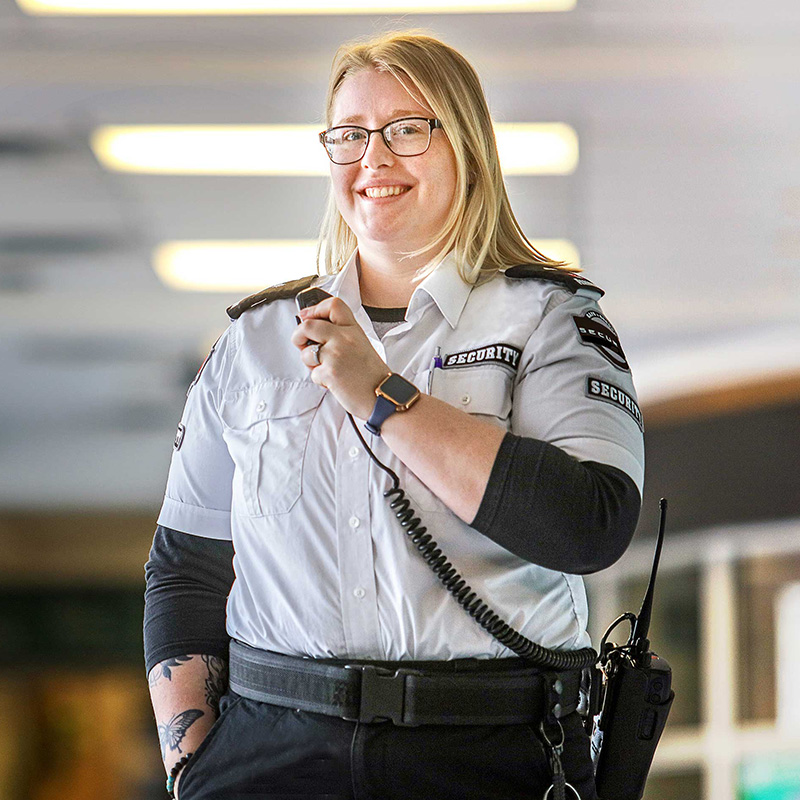
    Law enforcement and public safety careers are evolving quickly as digital tools reshape how professionals collect evidence, document incidents, and conduct online investigations. DC’s Protection, Security and Investigation program introduces students to emerging technologies used in modern law enforcement and public safety, including digital tools for evidence collection, surveillance, online investigations, and other tech-enabled practices.

    Through a combination of academic study and practical training, students gain a strong understanding of the many roles within policing, security, investigations, and emergency response, preparing them for a dynamic field with growing opportunities.

  • Transform your business ideas into real opportunities, with a pathway to a university degree

    Entrepreneurship is changing rapidly as online sales, social media marketing, and artificial intelligence reshape how businesses start and grow. DC’s Entrepreneurship and Small Business program equips students with hands-on experience, mentorship, and applied learning to navigate this environment.

    Students develop AI-supported research skills, collaborate with peers across DC programs to expand their professional networks, and take part in local chamber of commerce events.

    For those seeking an academic credential alongside practical experience, the Entrepreneurship and Small Business – Business Transfer to Ontario Tech University Bachelor of Commerce (Honours) pathway allows students to earn both a DC diploma and an Honours Bachelor of Commerce in as little as four years.

  • Build future-ready skills through flexible computer and IT programs

    If your interests lie in programming, systems administration, infrastructure, or cloud technologies, DC’s computer programs offer flexible pathways to develop the skills employers value most. These include Computer Programming & Analysis, Computer Programming, Computer Systems Technician, Computer Systems Technology, as well as a pathway that allows students to complete two years at DC and then transfer to Ontario Tech University to finish a four-year Bachelor of Information Technology (Hons) degree.

    These programs feature a shared first semester for most pathways, allowing students to explore software and hardware before selecting their focus. Emphasizing strong fundamentals, project-based learning, and exposure to multiple programming paradigms and systems technologies, the programs prepare graduates to enter the workforce as adaptable, trainable professionals ready to meet evolving industry demands.

January is the perfect time to begin your studies and get a head start on reaching your goals. Whether your path leads to public safety, entrepreneurship, or the tech sector, DC offers programs designed to support your success.

Explore all of the programs available for a January start at DC.


Durham College and Achēv partner to deliver electric vehicle upskilling for Ontario technicians

The first cohort of Durham College’s (DC) new electric vehicle (EV) upskilling program has successfully completed their training, delivered in partnership with Achēv. The program gives licensed automotive service and body repair technicians the opportunity to expand their skills as Ontario’s auto sector shifts toward electric technology.

Delivered at DC’s Whitby campus and funded by the Government of Canada, the free 30‑hour EVolveSkills program combines online learning with in‑person sessions focused on high‑voltage safety, hybrid and electric powertrains, and EV battery systems. A second cohort begins November 18, and registration is now open.

“This program gives licensed automotive professionals a chance to safely explore the technologies driving the shift to electric vehicles,” said Mike Frederick, faculty member in DC’s Faculty of Skilled Trades and Apprenticeship. “It’s designed to build confidence through hands‑on experience with high‑voltage systems and components, supported by the same faculty and facilities that deliver our Electric Drive Vehicle Technician (EDVT) program.”

The partnership draws on Achēv’s expertise in workforce development and community engagement. The organization has connected with hundreds of auto shops across Ontario to identify technicians eager to gain new skills that support their career growth.

“The completion of Durham College’s first EVolveSkills cohort marks an exciting step forward in preparing Canada’s workforce for the electric vehicle transition,” said Tanvi Sukhija, Program Manager of the EVolveSkills Initiative at Achēv. “This collaboration reflects the power of partnership between education and industry — equipping learners with future-ready skills while supporting employers in meeting the growing demand for EV expertise.”

For participants, the experience is both practical and future-focused.

“This program helped me build confidence working safely with high-voltage systems and better understand the different types of electric vehicles,” said Matthew Fraser, a participant in the program’s first cohort. “I’d definitely recommend it to anyone who’s unfamiliar or uncomfortable with EVs.”

DC is one of the first Ontario colleges to deliver the EVolveSkills upskilling program, designed specifically for licensed automotive technicians and apprentices. It complements, but is distinct from, the college’s full-time EDVT diploma program, which prepares new students to launch careers in the evolving electric mobility sector.

About the EDVT Program
Offered at DC’s Whitby campus, the Electric Drive Vehicle Technician (EDVT) program is delivered over four semesters, designed to prepare graduates for the growing clean‑transport sector. Students gain hands‑on experience diagnosing, maintaining, and repairing electric and hybrid vehicles, including high‑voltage systems, drive systems, battery technologies, and regenerative braking.

Graduates leave with a competitive advantage, combining traditional automotive skills with specialized EV expertise. The program’s labs and industry‑informed curriculum ensure students are prepared for the evolving automotive sector.

Together, the EVolveSkills upskilling program and the EDVT program demonstrate Durham College’s commitment to providing future-focused, industry-connected learning that prepares students and working professionals for success in a rapidly changing sector.


Durham College to share global expertise at international conference

Durham College’s (DC) growing global reputation in the field has earned its International Education Office (IEO) an invitation to present two sessions at this year’s Canadian Bureau for International Education (CBIE) Conference and Excellence Awards. Delivered to an audience of higher education leaders, government officials and policy experts, these sessions position DC among influential voices driving global collaboration in post-secondary education.

Global leadership, local impact
Taking place November 2 to 5 in Québec City, the CBIE Conference is a key industry gathering that brings together stakeholders committed to advancing international education. DC’s invitation to present multiple sessions affirms the college’s leadership in shaping inclusive, globally-minded education strategies. Its focus on Sustainable Development Goals (SDGs) and worldwide partnerships demonstrates leadership at home and abroad, creating opportunities for students to develop as global citizens. By leveraging the power of its network, DC fosters collaborative partnerships that amplify learning, community impact, and sustainable development outcomes around the world.

Working together for sustainable development goals
In the first session, Rebalancing SDG Narratives: Co-Creating Sustainable Impact Through Meaningful Community-Centered Partnerships, DC’s Jacqueline Towell, Associate Director, International Projects and Partnerships, will explore the college’s collaboration with the University of the Western Cape in South Africa. The session focuses on advancing the SDGs through community partnerships that integrate voices from both the Global South and North, address decolonization and power dynamics, and encourage participatory approaches to sustainable development.

“Our work shows that meaningful community engagement and international collaboration can have sustainable impacts while reflecting the lived experiences of diverse communities,” said Towell. “For our students, these partnerships demonstrate how global citizenship translates into real-world skills and understanding.”

The session also highlights DC’s multi-year consulting project supporting more than 10 colleges in South Africa to transition to digital learning, reflecting the college’s commitment to innovation, equity, and inclusivity in international education.

Supporting international students through policy shifts
The second session, Collaboration is Key: Coordinating Efforts in International Student Support and Immigration Advising, is a pre-conference workshop co-led by Sarah Edwards, International Student Advisor at DC will explore the importance of fostering strong, collaborative connections across campus partners. It will present case studies reflecting recent immigration updates, engage in interactive peer exchange, and develop practical strategies to support international students academically, personally, and through immigration processes.

“DC’s approach to international student support is holistic,” said Edwards. “By building collaborative networks across departments and faculties, we ensure students receive coordinated guidance that supports both their academic success and personal well-being.”

Learn more about Durham College’s International Education initiatives.