Choosing to pursue post-secondary education is an investment in your future but figuring out how to pay for it can be an important part of the decision. To help students meet their career goals, Durham College (DC) offers a range of scholarships, bursaries and awards to help make education more accessible. Some are based on academic achievement, while others consider financial need, personal circumstances, community involvement or other factors. And you may be surprised by some of the opportunities available.
Here are five worth knowing about.
Get up to $40,000 toward a career in the trades
Planning to build a career in the skilled trades? The Schulich Builders Scholarship provides financial support to eligible students pursuing select skilled trades programs at DC.
Scholarships are valued at up to $40,000, with $20,000 available per academic year to help cover tuition, living expenses and tools. Applicants should demonstrate a strong work ethic and character, financial need, and a willingness to act as an ambassador for their career choice in the skilled trades and the Schulich Builders program.
Cover your first-semester tuition with a Whitby Fire award
Two awards are available each year to new students accepted into DC’s Firefighter – Pre-Service Education and Training or Fire Prevention and Technology programs. The award covers first-semester tuition and is open to Durham Region residents who graduated from a Durham Region high school, with preference given to Whitby graduates. Applicants must self-identify as a racialized person or be economically challenged.
A bursary could support your studies for up to four years
The bursary helps cover tuition in a student's chosen entry program and continued studies at DC for up to four years. Up to 10 students are awarded the bursary each year, and recipients participate in mentorship programs at the college as a core component of the award.
The bursary is open to eligible full-time students entering their first post-secondary program. Applicants must live in Durham Region, have graduated from a Durham Region high school within the last three years, demonstrate financial need and have overcome obstacles and adversity.
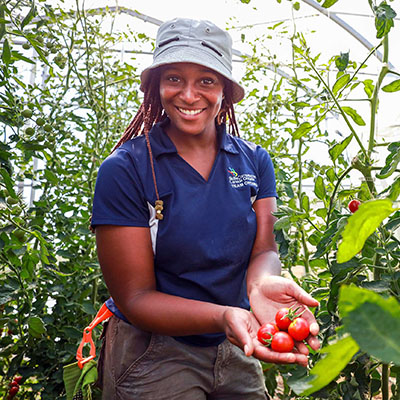
Passionate about food and farming? There’s a $2,500 scholarship available
If you are studying Horticulture Technician or Food and Farming, your interest in sustainable agriculture and local food systems could open the door to additional financial support.
The Barrett Centre Leader in Horticulture and Farming Scholarship provides two $2,500 scholarships to students who are passionate about sustainable agriculture, horticulture, community resilience, food security and strengthening local food systems.
The scholarship also recognizes students who demonstrate leadership or an entrepreneurial spirit and have community volunteer experience related to horticulture and urban farming.
Enter for a chance to win $5,000 toward your DC tuition
There is another way prospective students can put themselves in the running for financial support: enter DC's $5,000 tuition credit draw.
If you are planning to attend a DC program in September 2027, you can join DC's email subscription for a chance to win a $5,000 tuition credit. The subscription provides information about DC programs, events, and services, and gives eligible participants a chance to win the tuition credit draw.
You can also enter by registering for and attending a DC Open House. All registered attendees at the event are automatically entered to win the tuition credit.
There’s more financial aid to explore These are just five of the scholarships, bursaries and awards available at DC. Explore all available optionsto see which ones might be a good fit for you and learn more about eligibility and application requirements.
When Matthew Adams began looking for a new career, he knew he wanted something different from his previous work in the technology industry. Following a layoff, the mature student was ready for a new career that would allow him to solve problems, work with people, and make a difference in their lives.
His interest in biology and science had always drawn him toward healthcare, but he wasn’t sure which field was right for him. In 2023, a visit to Durham College’s Fall Open House changed that when he spoke with Dental Assisting Program Coordinator Kim Stever.
“I knew I loved working with people and helping people find solutions to their problems,” says Adams. “This time I wanted to move away from a desk job and more towards a job where I could work with my hands and in person.”
That conversation led Adams to DC’s Dental Assisting program, where he credits the professors and instructors with helping him build the knowledge and confidence to begin a new career.
“Hands down it was the professors and instructors that made my experience great,” says Adams. “They’re all so passionate about the dental industry, and it really showed in the way they supported us in both the clinic and classroom.”
The program’s combination of classroom learning, clinical experience and field placement also helped Adams make the transition from student to professional.
“Having a field placement was a chance for me to iron out those wrinkly skills that I had only practised in the lab,” says Adams. The four-week placement at a progressive Toronto dental practice allowed him to apply his skills, gain valuable experience, and ultimately led to an immediate job offer.
“Matthew’s story is a great example of how a career change can open the door to a rewarding new profession,” says Kim Stever, program coordinator, Dental Assisting. “From the beginning, Matthew brought enthusiasm and a genuine commitment to learning. He embraced the hands-on experiences, challenged himself to develop new skills, and really grew in confidence throughout the program. It was wonderful to watch him build such a strong foundation for his new career.”
Adams’ success at DC earned him the Dental Assisting Academic Achievement Award in his final semester, recognizing his commitment to the program and his studies. “I was laser-focused on wanting to learn this profession inside and out,” says Adams.
Since graduating, Adams has remained active at DC and in the dental assisting field. He now serves as Chair of DC’s Dental Assisting Program Advisory Committee, helping shape the program and support future learners. He was also recently elected Student Representative for the National Dental Assisting Examination Board for a two-year term and is the Webinar Convenor with the Ontario Dental Assistants Association.
For Adams, the most rewarding part of his new career is seeing the difference he can make for patients.
“It’s amazing to see how much someone’s life can change when their oral hygiene and oral health are improving and knowing you played a part in that,” says Adams.
His experience has also shaped his advice for others considering the profession: be open to opportunities and get involved.
“You just have to put yourself out there and be the person to say ‘yes’ to opportunities. You never know where it will take you, but I promise it will make you a better dental assistant.”
Interested in a career in dental assisting? Bring your questions to DC’s Fall Open House on November 7 or learn more about the program on our website.
For many students, Durham College’s (DC) Occupational Therapist Assistant and Physiotherapist Assistant (OTA/PTA) program is a deliberate first step toward becoming a registered occupational therapist or physiotherapist. Through rigorous academics, applied learning and diverse clinical placements, the program offers a strong foundation for graduate study in rehabilitation sciences.
This fall, two DC graduates are continuing that journey after earning admission to some of Canada’s most competitive graduate programs. Ben Kerry will begin the Master of Science in Physical Therapy at the University of Toronto, while Shun Naito will pursue the Master of Science in Occupational Therapy at McMaster University.
“Many of our students arrive knowing they want to go further,” said Laura Maybury, Program Coordinator of the OTA/PTA program. “Our job is to make sure they leave with the clinical skills, academic preparation, and professional experience to compete for those spots.”
Kerry’s interest in physiotherapy began after a hockey injury as a teenager. Working with a physiotherapist during his recovery showed him the impact the profession can have, inspiring him to pursue a career helping others regain their health and mobility. When he was ready to take the next step toward graduate study, DC gave him the preparation he needed through accredited training, placements across pediatric, hospital, and private clinic settings, and pathways to further education.
“The in-person labs taught me many techniques to effectively and safely handle my patients,” Kerry said. “Each placement gave me insight into a different level of healthcare and the skills a physiotherapist needs to give patients the best possible care.”
Naito’s path began when his grandmother, recovering from hip surgery, could no longer perform the daily activities she loved. An occupational therapist’s visit changed that, and Naito knew what he wanted to do. He chose DC’s OTA/PTA program for its accreditation and a curriculum that integrated anatomy, physiology, and clinical conditions in a way that made sense to him.
“The program was well thought out, and the instructors were always willing to take feedback and weren’t afraid to adapt their teaching approaches to strengthen student learning,” Naito said. “That was something I had never encountered prior to attending DC.”
Graduates of DC’s OTA/PTA program are prepared to work as assistants in physiotherapy and occupational therapy settings immediately upon graduation.For those with longer-term educational ambitions, the program also offers transfer pathways into related undergraduate degrees. An honours undergraduate degree, along with any additional prerequisites, is required before graduates can apply to a master’s program in occupational therapy or physiotherapy in Canada.
A field placement can do more than provide workplace experience. For Durham College (DC) Recreation Therapygraduate Kyle Repulles, it became the first step toward a rewarding career with Lakeridge Health.
“Kyle’s story is a great example of what we aim to achieve in Recreation Therapy at Durham College,” said Erica Arbour, Program Coordinator. “Applied learning gives students the opportunity to build confidence, develop professional relationships and, in many cases, launch their careers before they graduate.”
For Repulles, the path into Recreation Therapy was driven by a passion for helping others.
“I enjoy working with people and creating meaningful relationships,” he said. “As a dancer, I’ve seen firsthand how recreation, movement, and social connection can have a positive impact on someone’s well-being.”
He chose DC for its strong focus on experiential learning and career-focused preparation.
“I wanted a program that would prepare me for the workplace, and Durham definitely did that.”
During his field placement at Lakeridge Health Whitby, Repulles quickly became part of the recreation team and developed strong relationships with patients and staff.
“From my first day, I felt welcomed by everyone I worked with,” he said. “One of my favourite parts was building relationships with patients and getting to know them each day on a personal level. It was rewarding to see how something as simple as a conversation can brighten someone’s day.”
He added that the supportive environment allowed him to build confidence while taking on increasing responsibility, including facilitating programs and applying classroom learning in a professional setting.
His time at Lakeridge Health Whitby helped him build the skills and connections that supported his transition into a Therapeutic Recreation Assistant role with Lakeridge Health Bowmanville after graduation.
“There’s definitely a difference between being a student and being an employee,” he said. “But this program and Durham College helped me prepare for that transition. I’ve been able to apply many of the skills I learned, along with integrating my personal hobbies and interests to create rewarding programs.”
Reflecting on his learning, Repulles highlighted the value of applied coursework and faculty support throughout the program.
“The theory in class was important, but being able to apply it through assignments, presentations and workplace experiences really helped everything come together,” he said.
For current and prospective students, his advice is simple: make the most of every opportunity.
“Be willing to learn, ask questions, and step outside your comfort zone,” he said. “If you treat every day as an opportunity to grow, it will show in your work. People notice when your heart is in what you do.”
Strong foundational skills can open doors to endless opportunities — something Durham College (DC) alumna Sarah Barrett knows firsthand. From enrolling in the Office Administration – General program to now serving as Manager, Faculty Operations for both the Faculty of Business and Information Technology and the Faculty of Media, Art and Design, as well as Manager of the Durham College Spa, Sarah’s DC journey shows how practical skills, dedication, and curiosity can turn into a fulfilling career. Along the way, her connection to the DC community has remained a constant source of inspiration and growth.
We recently caught up with Sarah to learn about her experience and advice for future students.
Q: What drew you to the Office Administration program at DC?
I wanted a practical, career-focused program that would prepare me for the workforce confidently. The mix of technical skills, communication training, and professional development really stood out. Beyond that, the DC community was so welcoming — it made learning collaborative and enjoyable, and I knew it would give me skills to thrive across industries.
Q: How did your career path unfold after graduation?
After graduating in 2011, I worked in administrative roles across legal and corporate sectors, building organization, communication, and problem-solving skills. Returning to DC as an employee allowed me to apply those skills in the environment that shaped my early career, where I now manage multiple faculties and support students walking the path I once did.
Q: Which skills from the program do you rely on most today?
Organization, clear communication, and adaptability. The program also instilled confidence and professionalism. Administrative professionals are often at the centre of operations, supporting leadership, coordinating logistics, solving problems, and ensuring processes run smoothly. The ability to anticipate needs, think critically, and remain organized under pressure are lessons that continue to guide me in my current role.
Q: What advice would you give current students?
Take full advantage of every opportunity the program offers. Connect with your faculty, take on projects that challenge you, and engage with the campus community. The skills you gain are invaluable, and the relationships and sense of belonging you build at DC can open doors in ways you might not even imagine.
If you’re looking for a program that offers hands-on experience, professional development, and transferable skills, the Office Administration – General program is your launchpad — just as it was for Sarah on her path from learner to leader.
As Durham College recognizes International Day for Women and Girls in Science on February 11, it celebrates students like Alyssa Miniotas who are building careers in STEM. Her journey from childhood curiosity to chemical engineering student reflects the power of applied learning and supportive communities in helping women succeed in science.
For Miniotas, a student in Durham College’s (DC) Chemical Engineering Technologyprogram, an interest in science began early. From crystal-growing kits to hands-on labs in high school, she was drawn to experiences that allowed her to apply theory in practical ways. “I always learned the most and enjoyed my learning whenever I had a science class,” she says. Seeing concepts move from the page into real-world results helped confirm that science was the right path for her.
Her interest deepened in elementary school at an engineering camp for young girls. The experience allowed her to explore engineering in an environment where she felt encouraged and represented, and it helped her envision a future for herself in the field. Since then, she’s pursued a career in science where she could find her place in the industry and contribute to positive change.
When choosing a postsecondary program, Durham College stood out for its strong reputation in engineering and its focus on applied learning. She felt the program structure aligned well with her learning style and lifestyle. “The professors are really passionate about what they teach,” she says. “Being in a positive learning environment is so important.”
Through labs, classes and close collaboration with faculty and lab technologists, Miniotas has developed a stronger understanding of chemistry and engineering while building confidence in her abilities. She credits the willingness of faculty and lab staff to provide guidance and encouragement, particularly when coursework becomes more challenging. “They will help anywhere they can,” she says. “That reassurance makes a big difference.”
This year has tested that resilience in unexpected ways. Just before her final year began, Miniotas’s mother was diagnosed with cancer and began treatment. Balancing coursework, work and family responsibilities became part of her daily reality. Through it all, her mother remained her biggest cheerleader. “No matter how hard a day she was having, she was always encouraging me to study more and push my limits,” she says. “I could not be more grateful for the unconditional support I’ve received.”
Throughout her time at DC, Miniotas has sought out connections with other women in chemical engineering and across science and engineering programs. Building that community of support has been important to her. Learning alongside classmates from different backgrounds and cultures has expanded her perspective and reinforced the importance of diversity and inclusion in STEM fields.
As she prepares for graduation, Miniotas feels well positioned for the workforce. Opportunities to connect with graduates, hear from alumni and explore employment options have helped her better understand potential career pathways. After graduation, she hopes to work in the pharmaceutical industry, combining her interests in science and the medical field. “Even if people won’t know my name,” she says, “I know I’ll be making a difference.”
For women and girls who are curious about science but unsure about pursuing it, her advice is straightforward. “Take the first step,” she says. “Get out of your comfort zone and try something new. There are so many opportunities within science that you can find your own path and run with it.”
Miniotas’s story highlights how applied learning, supportive faculty and inclusive communities help women pursue and succeed in STEM careers, even in the face of life’s most difficult challenges.
When Annandi Diaram started Durham College’s Law Clerk program, she wasn’t sure exactly where her career would take her. What she did know was that she wanted guidance from someone who had walked a similar path. Through DC’s Alumni Mentorship program, she was paired with Michelle Long, a Law Clerk graduate who is now Director, Governance and Corporate Secretary at Kinross Gold Corporation.
“The mentorship has been invaluable,” says Diaram. “Michelle’s career trajectory confirmed that just because you go to school for a law clerk diploma does not mean you must only be a law clerk. The skills you develop — organization, critical thinking and the ability to work under pressure — prepare you for roles in compliance, insurance, governance and more.”
For Long, becoming a mentor was a way to give back. “Twenty years ago, I had guidance from a working law clerk who helped me bridge the gap between studying in school and entering the workforce,” she says. “I wanted to do the same for new graduates.”
Their relationship goes beyond practical advice. Long recalls that when she was a student, she took courses and completed placements without knowing exactly where she would land. “It took me many years to truly find what I loved, and I’m still learning every day,” she says. Now, she helps Diaram explore the many career possibilities that a Law Clerk diploma can open.
DC’s Law Clerk program combines classroom learning with two opportunities for work placements, giving students hands-on exposure to different areas of law and helping them make informed career decisions. Paid co-op placements, like the one that attracted Diaram, give students guaranteed real-world experience and the chance to connect with professionals in the field.
Nicole Doyle, Law Clerk Program Coordinator, says the mentorship program enhances the student experience. “Our Law Clerk program is designed to provide both practical skills and professional confidence,” says Doyle. “The mentorship program allows students to learn directly from graduates, see the wide range of career outcomes available, and build the networks and skills they need to hit the ground running after graduation.”
Diaram says the mentorship has helped her grow professionally and gain insight into her career options.“It’s reinforced the importance of marketing yourself, building professional networks, and communicating effectively,” she says. “I encourage future Law Clerk students to continue growing and take advantage of these opportunities to connect with alumni.”
Learn more about Durham College’s Law Clerk program here.
Over the holiday season, members of the Durham College (DC) community came together to raise $79,312 for the college’s Food Access Bursary, providing relief for students facing food insecurity.
Each year, applications for the Food Access Bursary open to full-time students in November and recipients receive a one-time bursary helping students cover the cost of a holiday meal, giving them a chance to enjoy the season and ease financial stress.
Together with the many DC employees, alumni, students, and community members that made donations to the bursary, three on-campus partners helped ensure funds were available for students in need. The Durham College Student Association (DCSA) returned as the campaign’s greatest supporter with a $30,000 gift to the fund, while the Durham College Alumni Association (DCAA) continued its support by matching the first $10,000 raised.
“By supporting this bursary, alumni are helping to meet students’ needs with compassionate and practical support so students can focus on their education,” said Jesara Holla, DCAA President. “By matching donations each year, we hope to turn our shared Durham College experience into lasting impact for current and future students and to inspire others to give and amplify the impact of every contribution.”
DC’s on-campus food provider Chartwells also jumped in to help by engaging with students on campus during their Connecting Through Food campaign, with a focus on raising awareness of food insecurity. Chartwells also made a matching contribution on purchases of select products sold at both the Oshawa and Whitby campuses.
In addition to funding available through the Food Access Bursary and Financial Aid, DC students have access to The Support Hub run by the DCSA. Thanks to a partnership with Feed the Need in Durham, The Support Hub provides full-time students with fresh produce, meat, dairy products, non-perishable and perishable food items, and hygiene products.
“At The Support Hub, we have seen firsthand how food insecurity can impact a student’s ability to succeed academically, and most importantly, to self-actualize,” said Nicole Shillingford-Grell, Manager of The Support Hub. “The DCSA is proud to contribute to the Food Access Bursary, an impactful resource that demonstrates what’s possible when people come together with a shared commitment to supporting students.”
To learn more about how your support can help students thrive, visit durhamcollege.ca/giving.
Durham College (DC) journalism student Cassandra Watt is inviting the campus community into a story about grief, resilience and healing as she shares her debut fantasy novel, Adventures in Haesticrye, at a public author reading later this month.
Adventures in Haesticrye follows Feran, a young character navigating grief after the loss of their mother. Consumed by guilt, Feran embarks on a magical quest that could bring her back, encountering fairies, mages and other fantastical beings along the way. Through the story, Watt explores grief and resilience, showing that it’s okay to feel and process loss. “The message I want people to take away about grief is that you shouldn’t push it away — you’re allowed to grieve,” she says.
Much of the novel was written during Watt’s time at DC. “Funnily enough, DC was the place where I wrote most of the chapters,” she shares. “I’d write a handful of times in class, but most of it was spent between classes in small study areas, if not there, outside the classroom doors. DC just has a feeling that makes me want to write to my heart’s content.” She adds that her college experience was especially helpful in completing her final draft and planning a sequel.
“It means a lot to me, getting to share my work with my fellow students,” Watt said, reflecting on the opportunity to present her book to the campus community and connect with readers in person.
Watt will read from her book and meet the campus community at the Campus Store on January 21 at 3 p.m. The event is open to all students and employees and will include a live reading, a question-and-answer session, and copies of the book available for purchase, which Watt will sign for attendees.
Biotechnology plays a role in many parts of everyday life. From bread, beer, and yogurt to biodiesel, pharmaceuticals, and medical diagnostics, the field brings science out of the lab and into real-world solutions across food, energy, health, and environmental industries.
At Durham College (DC), the Biotechnology – Advancedprogram helps students turn their curiosity about science into practical, job-ready skills through hands-on learning in industry-standard laboratories.
“Biotechnology is all around us,” says Dr. Christine Hand, Program Coordinator, Biotechnology – Advanced. “Our focus is helping students understand how science is applied in real production, testing, and regulated environments, not just how it works in theory.”
Building a strong foundation with a practical focus The Biotechnology – Advanced program develops foundational, transferable skills that prepare graduates for careers in food and beverage production, pharmaceuticals, energy, environmental testing, cosmetics, and fine chemicals.
Students begin with core courses in biology, chemistry, biochemistry, and microbiology before progressing to advanced laboratory work that mirrors professional workflows. As they move through the program, students apply their learning through labs and projects designed to reflect real workplace expectations and standards.
Learning in industry-standard laboratories Hands-on learning is central to the program. In the Industrial Microbiology course, for example, students work in DC’s Containment Level 2 laboratory, applying aseptic techniques and safety standards used in professional bioprocessing and food-production facilities.
Students design, optimize, and monitor full fermentation cycles for products such as cheese, yogurt, and craft beer, gaining insight into how early process decisions affect quality, safety, and outcomes.
“In the classroom, there are lots of interactive moments and learning opportunities,” says Biotechnology – Advanced graduate Lindsey Ure, “The labs provide opportunities for collaborative work.”
Learning quality and safety through real scenarios A signature learning experience is the Root Cause Investigation, where students step into the role of quality assurance analysts responding to a simulated microbial food-contamination event.
Students trace the source of contamination, document findings, and recommend corrective actions, closely mirroring the investigation and reporting processes used in food and pharmaceutical settings across Canada. The experience reinforces the importance of accuracy, documentation, and regulatory compliance in real-world environments.
Hands-on experience with advanced instrumentation In DC’s Armando Martone Chemical Instrumentation Lab, students gain extensive experience analyzing real commercial products such as beverages, pharmaceuticals, environmental samples, personal care products, and fine chemicals.
Using industry-based methods, students prepare samples, analyze data, and follow good laboratory and documentation practices. They work directly with chromatography and spectroscopy instruments commonly used in professional labs, building confidence with equipment, software, and quality testing.
Bringing it all together in bioprocessing In their final year, students complete the Bioprocessing course which brings together their technical and professional skills. Working in teams, they develop protocols to purify and test beta-galactosidase from Escherichia coli, an enzyme used in lactose-free food production.
Alongside laboratory work, students create business plans, proposals, and formal reports, strengthening collaboration, communication, and project management skills expected in professional scientific environments.
Career-ready skills employers value By graduation, students have hands-on experience with techniques such as DNA extraction, PCR and qPCR, CRISPR, protein purification, immunoassays, microscopy, tissue culture, and analytical instrument operation. They also develop a strong foundation in organic and analytical chemistry, with extensive lab experience using instruments such as GC, HPLC, UV-Vis, NMR, FTIR, and atomic spectroscopy.
Combined with instruction from faculty with real-world industry and research experience, this applied training prepares graduates for roles in biomanufacturing, fermentation, food technology, quality control, quality assurance, and chemical analysis.
“The hands-on experience actually helped me to gain experience and work in my current lab,” says Biotechnology – Advanced graduate Lin Saleem, “These are skills I use every day in my current job.”
 App Store
 Google Play